
First Voice
A Legacy of Community-Driven Advocacy
Active from 2019 to 2025, First Voice was a First Light-led coalition that brought Indigenous and non-Indigenous people together in a spirit of truth and reconciliation. Its vision was straightforward: to advance urban Indigenous rights in St. John’s and across Newfoundland and Labrador. This timeline highlights the major milestones in the journey of First Voice that continue to guide us forward.
2015–2019
Foundations and Early Vision
The idea for an urban Indigenous coalition emerged from early planning under the Urban Aboriginal Strategy and efforts by First Light – then the St. John’s Native Friendship Centre – to strengthen Indigenous visibility, representation, and collaboration.
2015–2019
Foundations and Early Vision
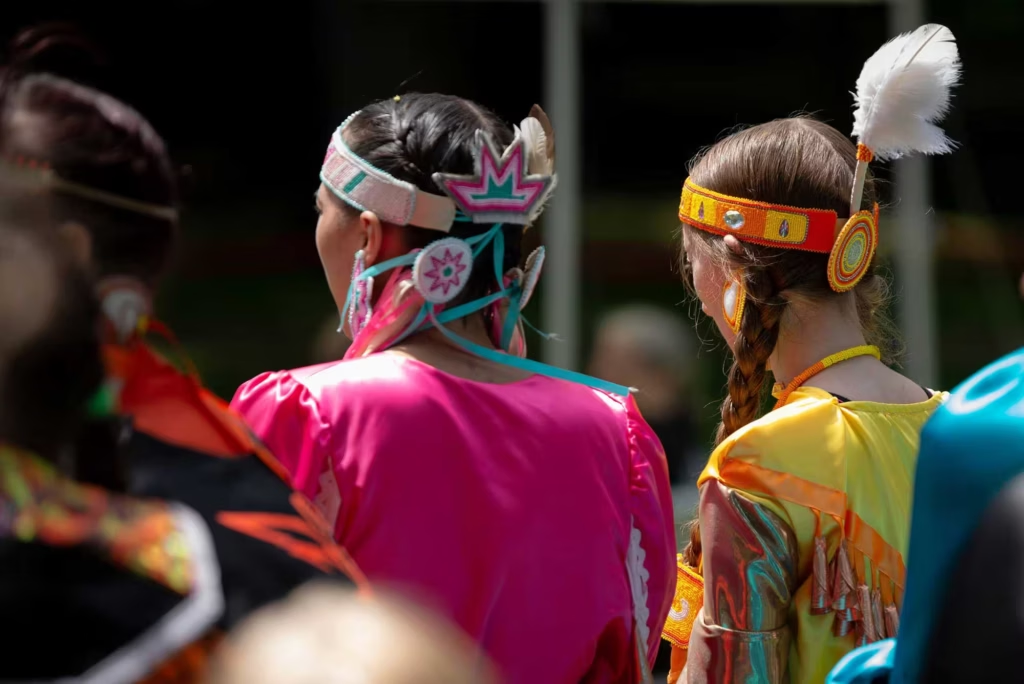
The idea to form an urban Indigenous coalition emerged to address longstanding gaps in Indigenous governance, representation, and collaboration in St. John’s.
As early as 2015, the St. John’s Native Friendship Centre – now known as First Light – began work on a Community Strategic Plan that identified the need to strengthen urban Indigenous visibility, increase civic participation, and improve collaboration with decision-makers over the long term. Around the same time, Indigenous organizations across Atlantic Canada were involved in federally supported planning under the Urban Aboriginal Strategy (UAS).
While these efforts helped uncover shared priorities, they lacked sustained coordination, Indigenous-led governance, and mechanisms to implement systemic change. In response to these limitations, First Light began convening discussions in 2018-19 to develop a new, Indigenous-led coalition in the city.
2019–2020
From Service Coordination to Systems Change
The St. John’s Urban Indigenous Coalition quickly grew into a rights-based, Indigenous-led movement for structural change. Rooted in community engagement, it moved away from service coordination and toward systems-level advocacy, public accountability, and Indigenous self-determination.
2019–2020
From Service Coordination to Systems Change
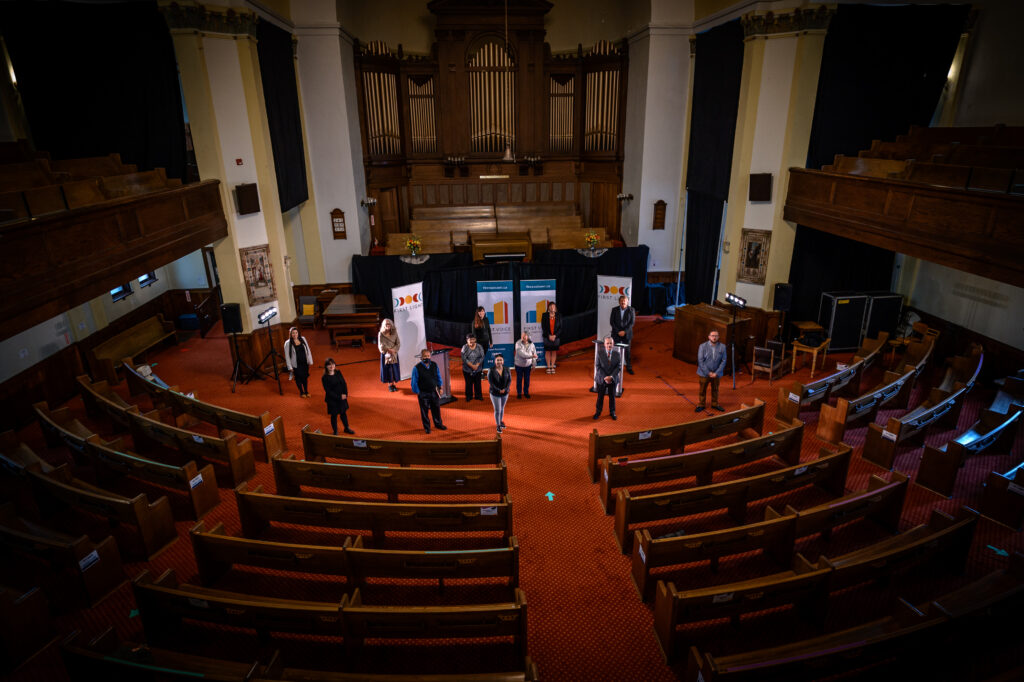
The St. John’s Urban Indigenous Coalition was formally established in 2019.
Initially envisioned as a multistakeholder network to coordinate service delivery and improve cross-sectoral collaboration, the vision for the new coalition quickly evolved in response to early community engagement. A community feast held in September 2019 identified high-level priorities and grounding values. A follow-up community workshop produced vision and mission statements based on these priorities.
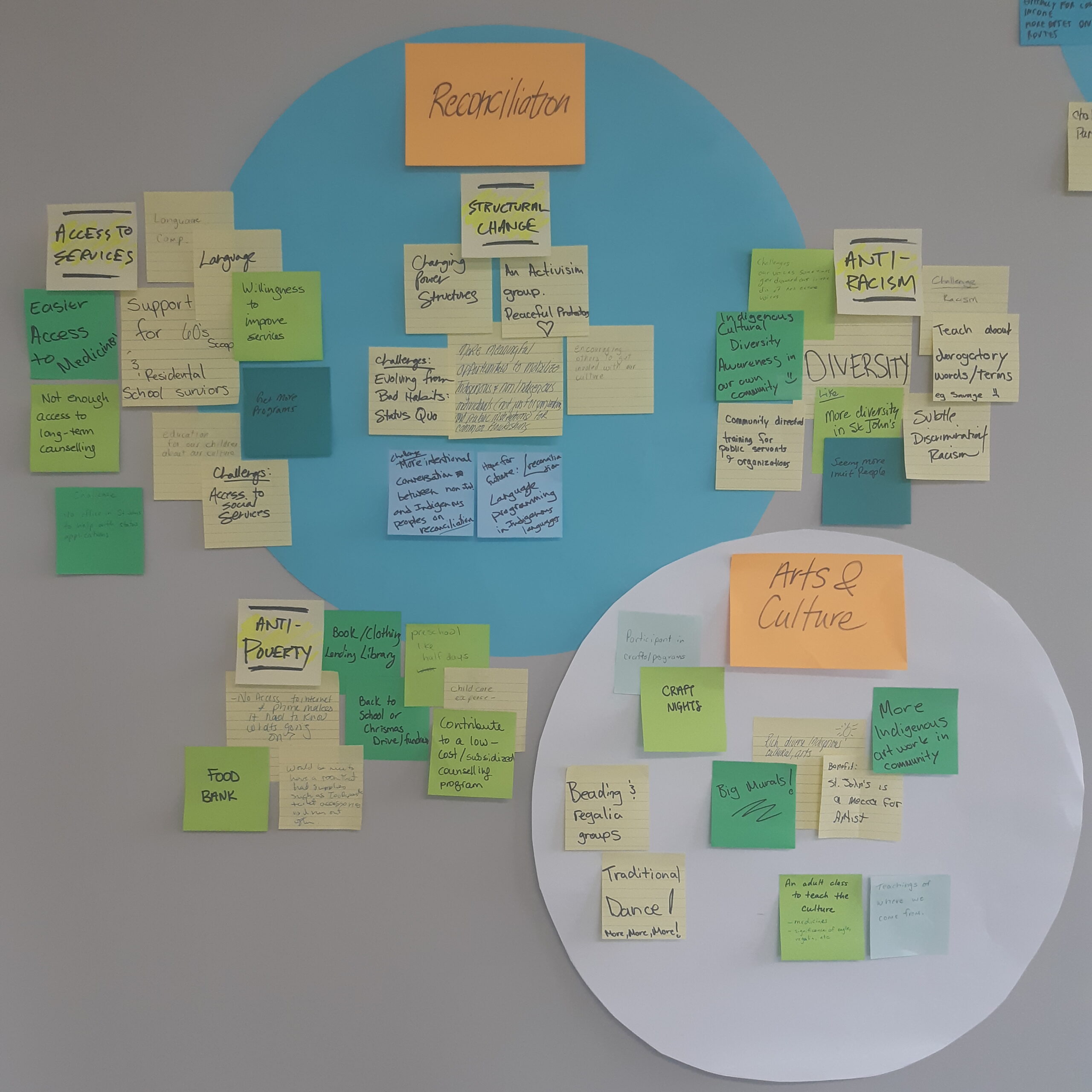
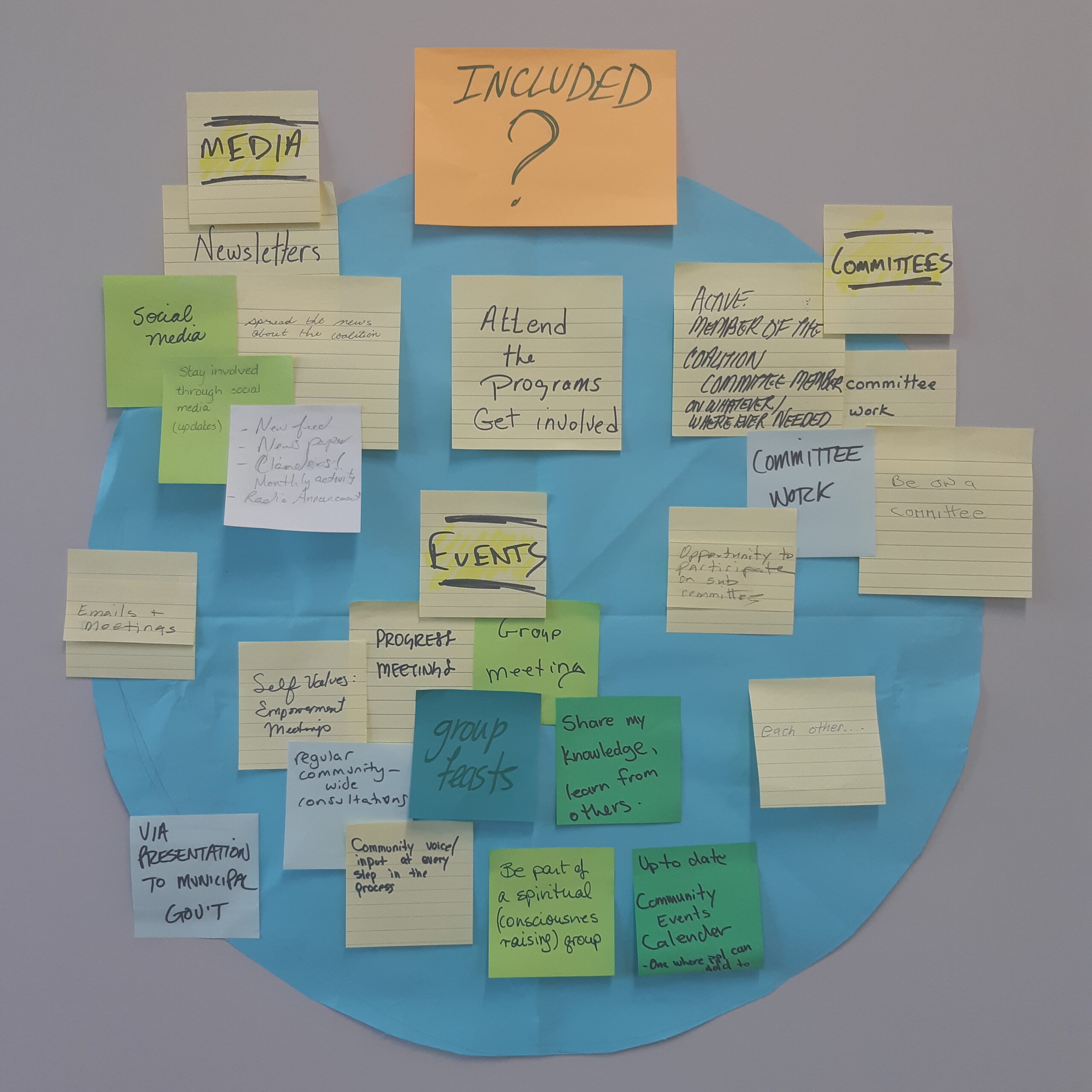
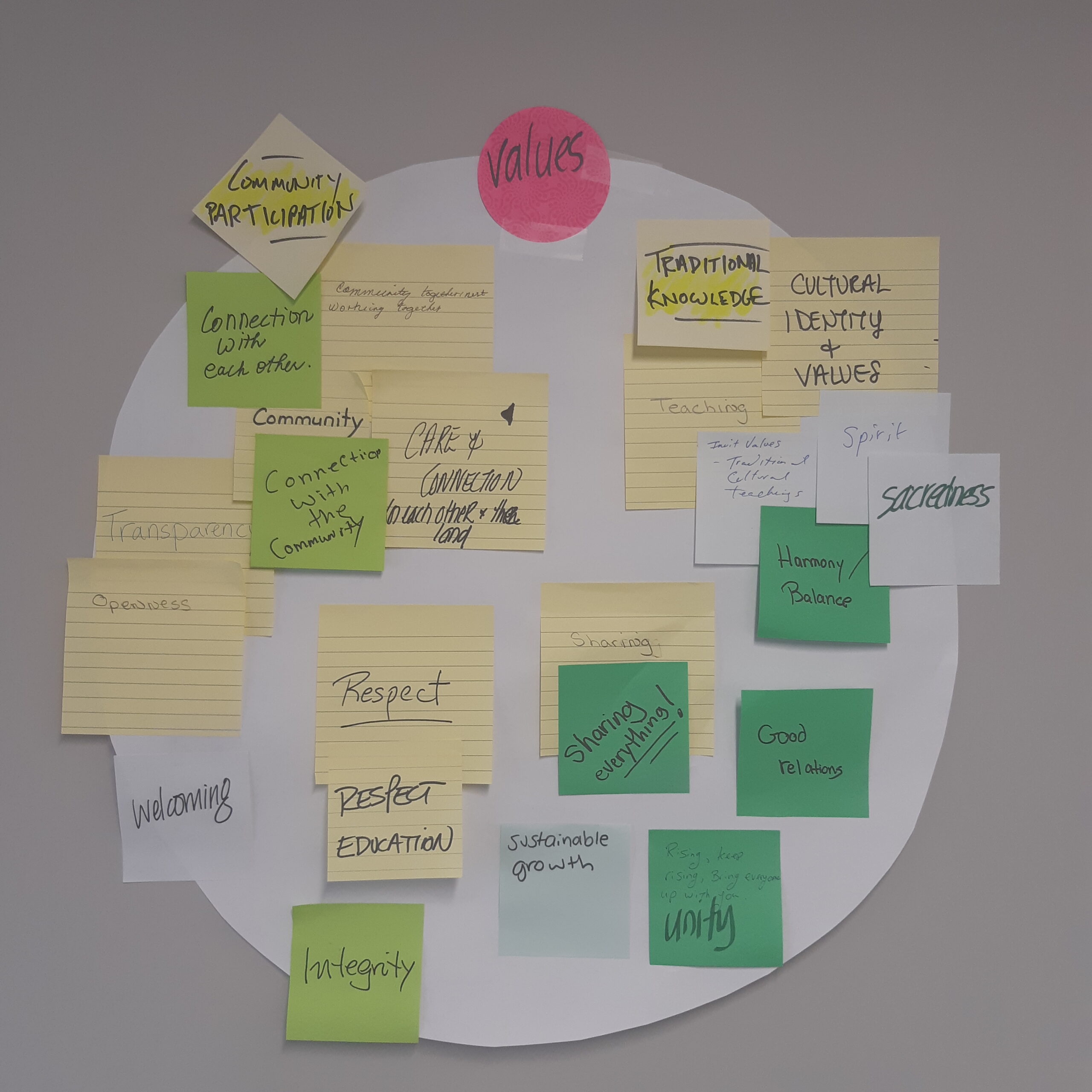
At these early gatherings, Indigenous community members made it clear that what was needed was not another service table, but a rights-based, Indigenous-led coalition focused on structural change. The coalition’s core purpose shifted accordingly, moving from service coordination to systems-level advocacy, public accountability, and Indigenous self-determination.
In June 2020, the coalition adopted the name First Voice – Amskwesewey kelusik in Mi’kmaw, Sivullipâk Nipilik in Inuktitut, and Ueskat Kaeimit in Innu-aimun (Sheshashiu dialect) and Uskatsh kaianmuetsh (Mushuau dialect) – marking its commitment to empowering urban Indigenous leadership and relational accountability with community.
A few months later, in September 2020, the City of St. John’s formally adopted its Declaration in Support of the Rights of Indigenous Peoples. The declaration affirmed the City’s support for First Voice and committed to working in partnership with the coalition to take meaningful steps toward implementing the Calls to Action of the Truth and Reconciliation Commission (TRC), the Calls for Justice of the National Inquiry into Missing and Murdered Indigenous Women and Girls (MMIWG), and the United Nations Declaration on the Rights of Indigenous Peoples (UNDRIP). It also promised to actively support the process of developing a more detailed, locally-grounded Community Action Plan.
2020–2021
Establishing Governance and Leadership
First Voice established a governing Partnership Table, bringing together institutional partners and Indigenous Community Advocates to keep lived experience at the centre of decision-making. Guided by community values and vision, this collaborative structure shaped the coalition’s priorities.
2020–2021
Establishing Governance and Leadership
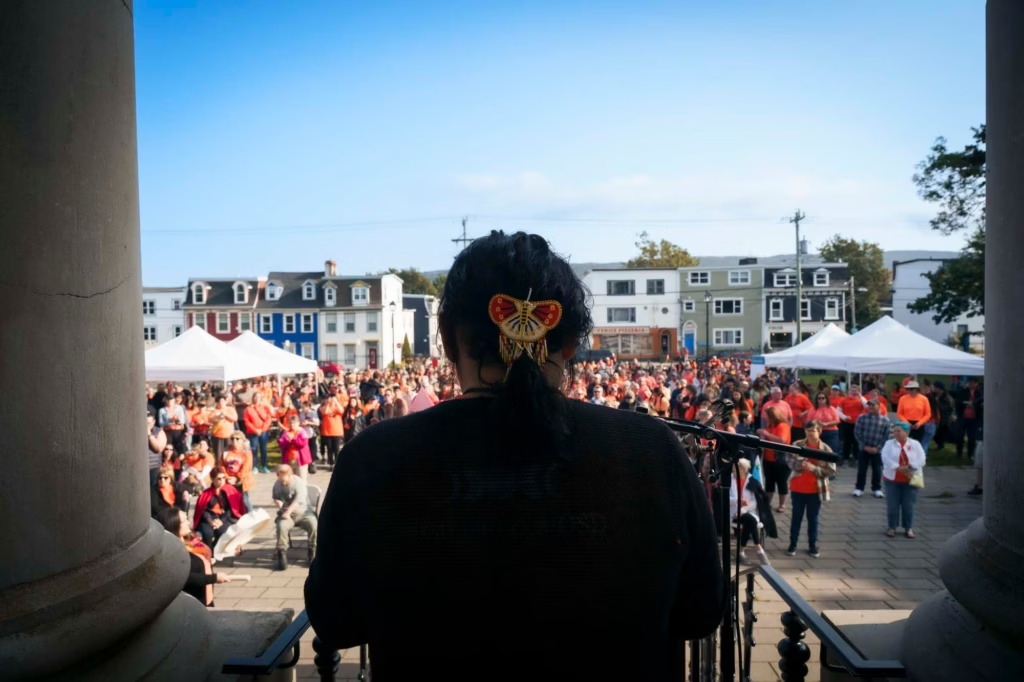
By 2020, First Voice had established a governing Partnership Table, composed of institutional partners and a group of Indigenous Community Advocates.
The Community Advocate role was central to the coalition’s function and purpose, ensuring that lived experience and grassroots priorities remained at the heart of decision-making.
Alongside First Light and Indigenous Services Canada, the coalition project’s Lead Partners, the following organizations also joined as Supporting Partners:
- City of St. John’s
- Eastern Health (now Newfoundland and Labrador Health Services)
- Memorial University
- Newfoundland and Labrador Housing & Homelessness Network
- Newfoundland and Labrador Human Rights Commission
- Provincial Advisory Council on the Status of Women
- Public Health Agency of Canada
- St. John’s Status of Women Council
- Stella’s Circle
- YWCA St. John’s
During this period, the coalition operated under Terms of Reference that were drafted based on the community’s vision and mission statements, along with the core values they had identified in early engagement events. These Terms of Reference guided priorities, processes, and decision-making until the release of the Community Action Plan in 2023.
2020–2023
Developing the Community Action Plan
First Voice led a community-driven process to create “Our Shared Vision: An Urban Indigenous Community Action Plan,” a comprehensive roadmap for advancing truth and reconciliation in Newfoundland and Labrador. The plan outlined 42 Calls for Change across nine key areas.
2020–2023
Developing the Community Action Plan
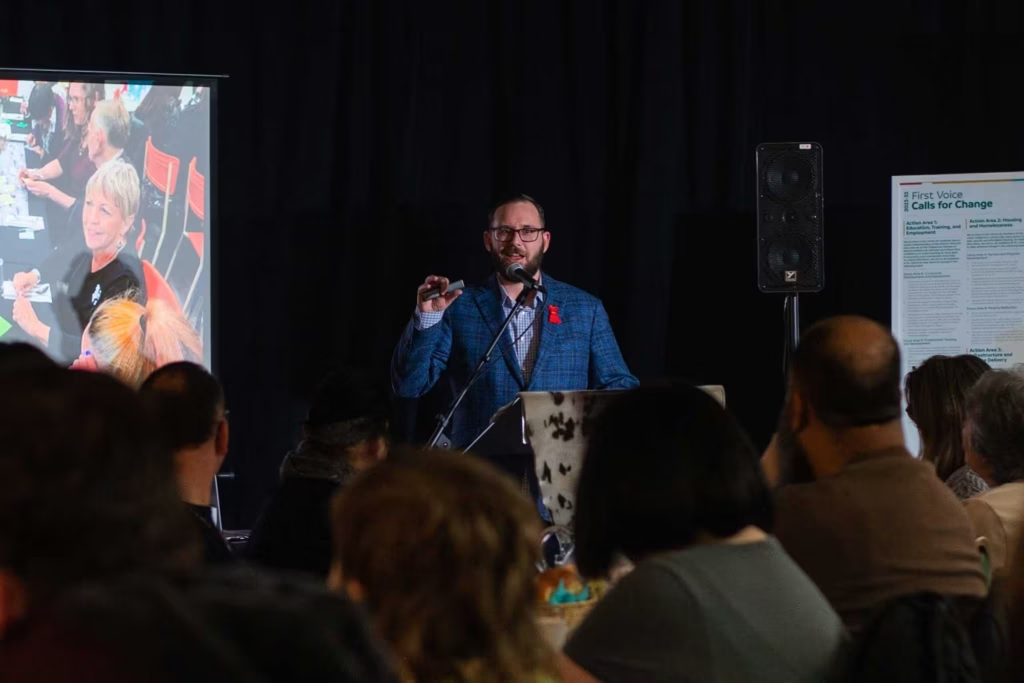
Between late 2020 and early 2023, First Voice developed and released a comprehensive plan to advance truth and reconciliation at the local and provincial levels.
Grounded in Indigenous rights and the principles of truth and reconciliation, the plan intentionally aligned with national and international frameworks. These included the Calls to Action of the Truth and Reconciliation Commission (TRC), the Calls for Justice of the National Inquiry into Missing and Murdered Indigenous Women and Girls (MMIWG), and the United Nations Declaration on the Rights of Indigenous Peoples (UNDRIP).
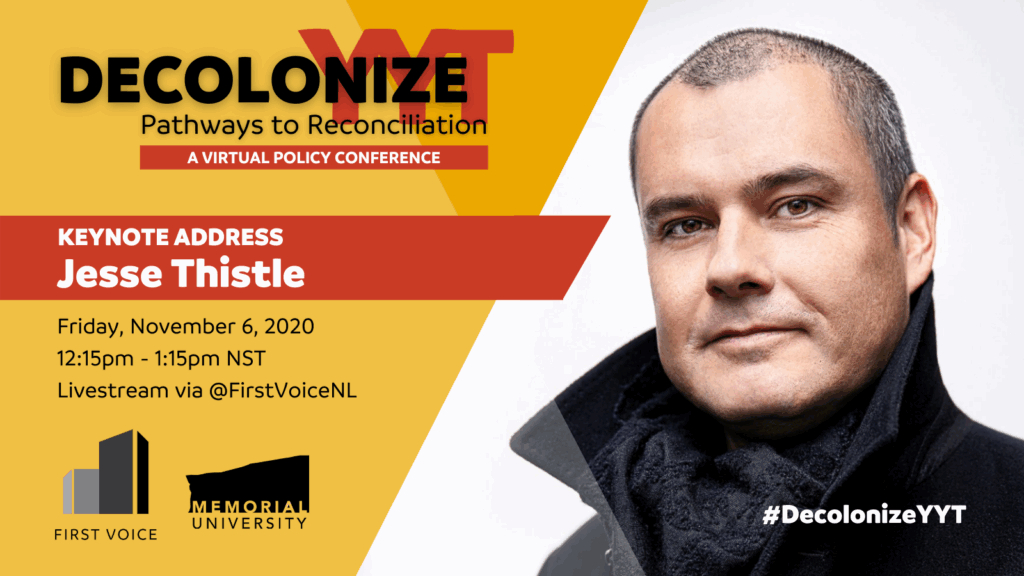
Building on the broad themes gathered at the September 2019 Community Feast, the planning process continued through Decolonize YYT, a virtual public event series held in the fall of 2020. Hosted during the early stages of the COVID-19 pandemic, the conference brought together members of the urban Indigenous community, institutional partners, and allies to explore systemic barriers and identify priority areas for action. Through a series of four themed sessions, participants told stories, shared their lived experiences, and helped generate the foundations for a community-driven vision for change. Jesse Thistle, bestselling author of the memoir From the Ashes, delivered the virtual keynote address on homelessness.
To carry this momentum forward, First Voice then launched four Standing Committees in March 2021. Each committee was responsible for translating community feedback from the Decolonize YYT event into specific objectives that would later form the basis of the 42 Calls for Change. The committees focused on:
- Education, Training, and Employment
- Health and Wellness
- Housing and Homelessness
- Infrastructure and Service Delivery
The resulting document, Our Shared Vision: An Urban Indigenous Community Action Plan, was completed in late 2022 and was presented to all coalition members for ratification. Its Calls for Change were grouped into nine focus areas:
- Curriculum Development and Deployment
- Professional Training and Training
- Employment Equity
- Service and Program Development
- Poverty Reduction
- Expanding Cultural Spaces
- Systemic Discrimination
- Cultural and Security Supports
- Law Reform
The Community Action Plan was formally launched in February 2023, at which point the coalition transitioned from its Terms of Reference to a more robust Coalition Charter.
2021–2024
Justice Reform and the Working Group on Police Oversight
First Voice convened a Working Group on Police Oversight that brought together government representatives, legal professionals and academics, service-delivery organizations, and members of the St. John’s urban Indigenous community.
2021–2024
Justice Reform and the Working Group on Police Oversight
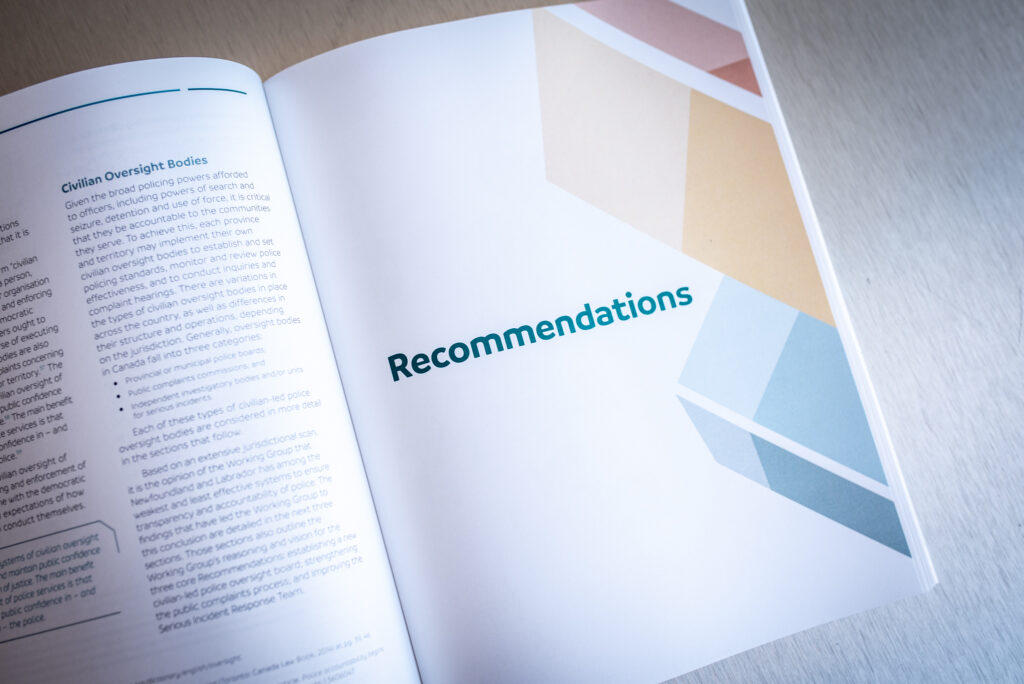
Justice was an early focus of the coalition’s advocacy efforts.
In early 2021, First Voice convened a Working Group on Police Oversight that brought together government representatives, legal professionals and academics, service-delivery organizations, and members of the St. John’s urban Indigenous community. The Working Group’s mandate was to study the existing system of police oversight in the province and develop community-grounded recommendations to improve trust, transparency, and accountability.
In June 2022, the Working Group released its final report, Building Trust, Restoring Confidence, which presented 26 recommendations to address longstanding concerns about transparency, accountability, and systemic discrimination in policing. The recommendations called for the creation of a police oversight board that would be independent of police, civilian-led, politically neutral, and representative of the province’s diverse communities; a streamlined, trauma-informed, and culturally inclusive public complaints process; and a more transparent and publicly accountable process for investigations into serious incidents involving police.
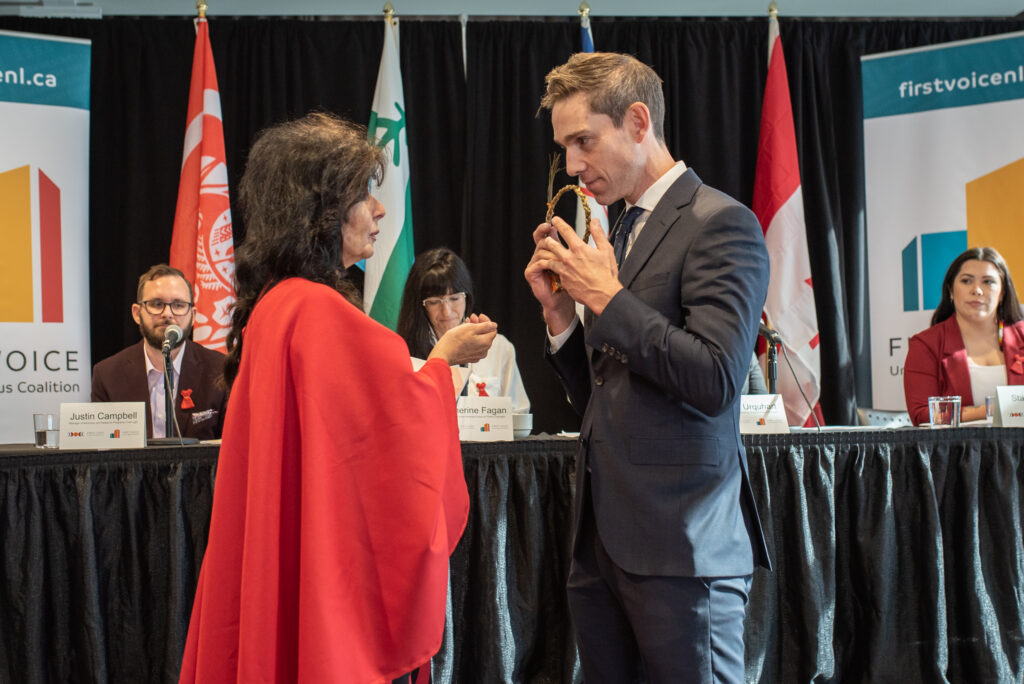
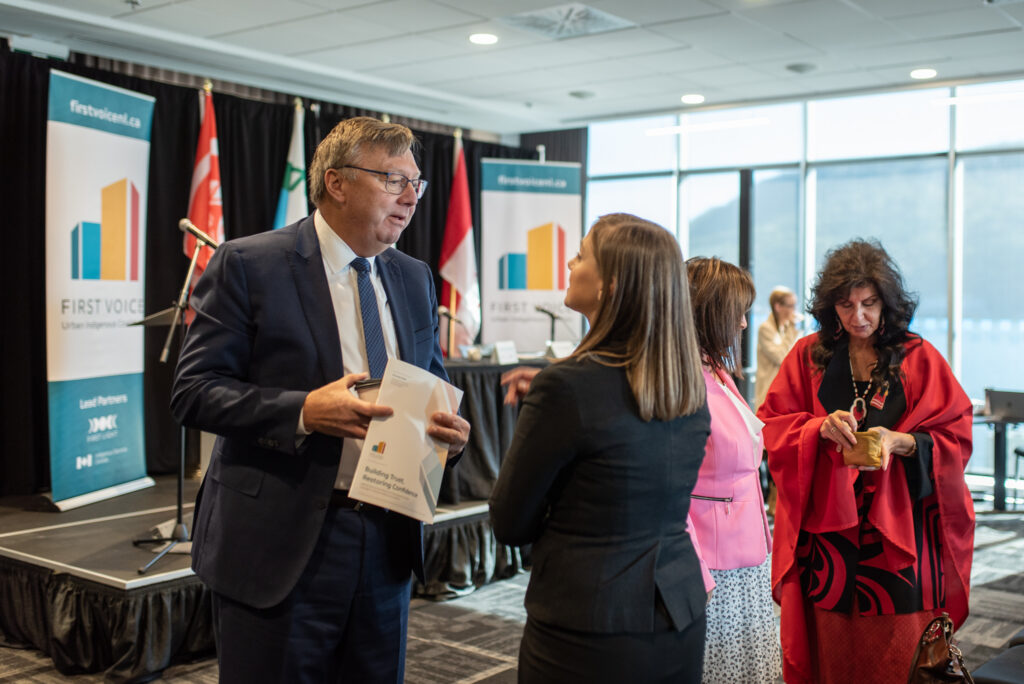
The Working Group’s efforts succeeded in raising the public profile of systemic problems in policing and eventually shifted the provincial policy agenda. In 2025, six of the Working Group’s recommendations were incorporated – in full or in part – into the Law Enforcement Oversight Commission Act. The new legislation replaces the RNC Public Complaints Commission with a more fully independent oversight body with broader powers.
Still, key challenges remained. A memorandum of understanding negotiated with the Serious Incident Response Team (SIRT-NL) to formalize Indigenous engagement in serious incident investigations was never signed by the agency. Similarly, repeated efforts to establish an RNC Indigenous Advisory Committee were unsuccessful. These barriers underscored the ongoing resistance of institutional actors to implement meaningful systemic change in collaboration with Indigenous Peoples.
2022–2024
Expanding Influence and Municipal Collaboration
Building on the 2022 First Peoples Policy Forum on Mobilizing Indigenous Sovereignty through UNDRIP, the coalition strengthened relationships, launched the Joint Coordinating Committee on Indigenous Rights, and advanced key policy recommendations on health, justice, and equity.
2022–2024
Expanding Influence and Municipal Collaboration
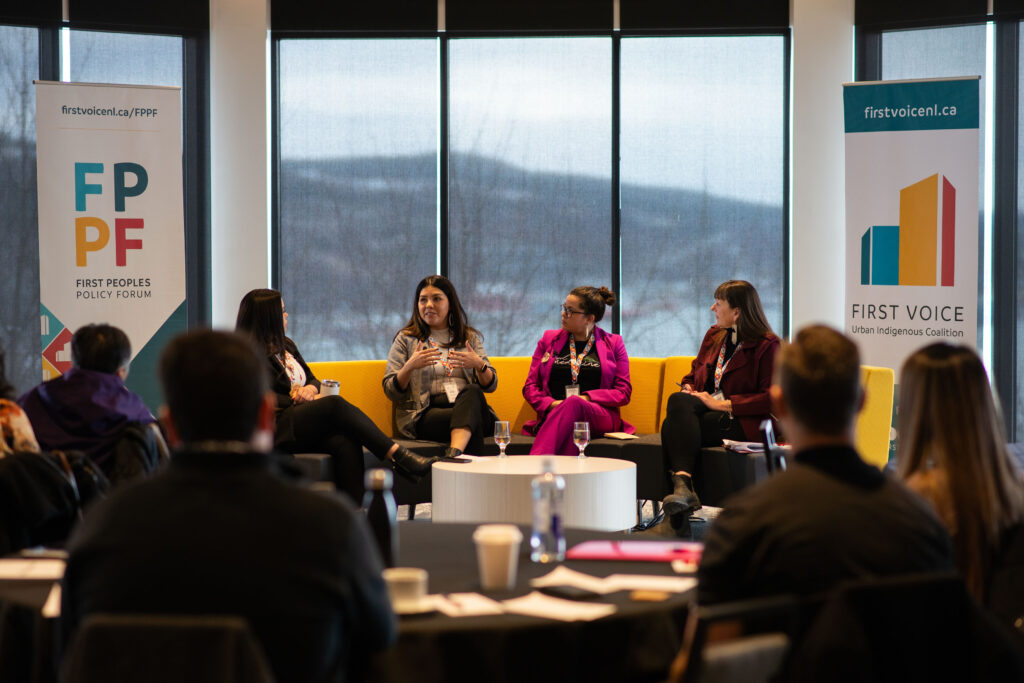
The First Peoples Policy Forum, held in 2022, was organized around the theme of Mobilizing Indigenous Sovereignty through UNDRIP.
The widely attended event generated lasting policy insights and strengthened relationships across sectors.
In March 2024, the coalition established a formal partnership with the City of St. John’s through the Joint Coordinating Committee on Indigenous Rights (JCCIR). With equal representation from First Light and the City, the group serves as a permanent mechanism to lead and support implementation of 18 municipal-level Calls for Change. The City of Mount Pearl later joined the committee after adopting its own municipal declaration, modelled on the 2020 declaration by the City of St. John’s. One of the JCCIR’s first major accomplishments came when St. John’s City Council acted on its proposal to formally recognize National Indigenous Peoples Day in place of the June Holiday (formerly “Discovery Day”). Mount Pearl followed suit the following year.
During this period, the coalition also submitted targeted policy recommendations to governments and professional bodies. These addressed a wide range of systemic issues, including cultural safety in health care, Indigenous inclusion in health workforce planning, anti-discrimination and Indigenous legal education, and poverty reduction as a strategy to prevent gender-based violence.
2020–2023
Creative and Cultural Initiatives
Beyond policy, First Voice celebrated Indigenous culture and creativity through initiatives like the Indigenous Advocate Award and a Creative Residency program, amplifying stories and voices that inspire change and honour lived experience.
2020–2023
Creative and Cultural Initiatives
The coalition’s work extended beyond policy into culture and creativity.
In 2020, First Voice launched the Indigenous Advocate Award, honouring Indigenous people who advanced Indigenous rights and visibility through their work. Recipients included:
- Charlotte Winters-Fost (2020): Recognized for her leadership in community advocacy and her role in shaping the First Light’s early vision and structure as a Friendship Centre.
- Diem Saunders (2021, posthumously): Honoured for their contributions to Two-Spirit and Indigenous LGBTQIA+ visibility and justice, and remembered as a powerful voice for inclusion and equity.
- Jennie Williams (2022): Celebrated for her work as a filmmaker and photographer, documenting Inuit life in Labrador with a strong focus on cultural resurgence and self-representation.
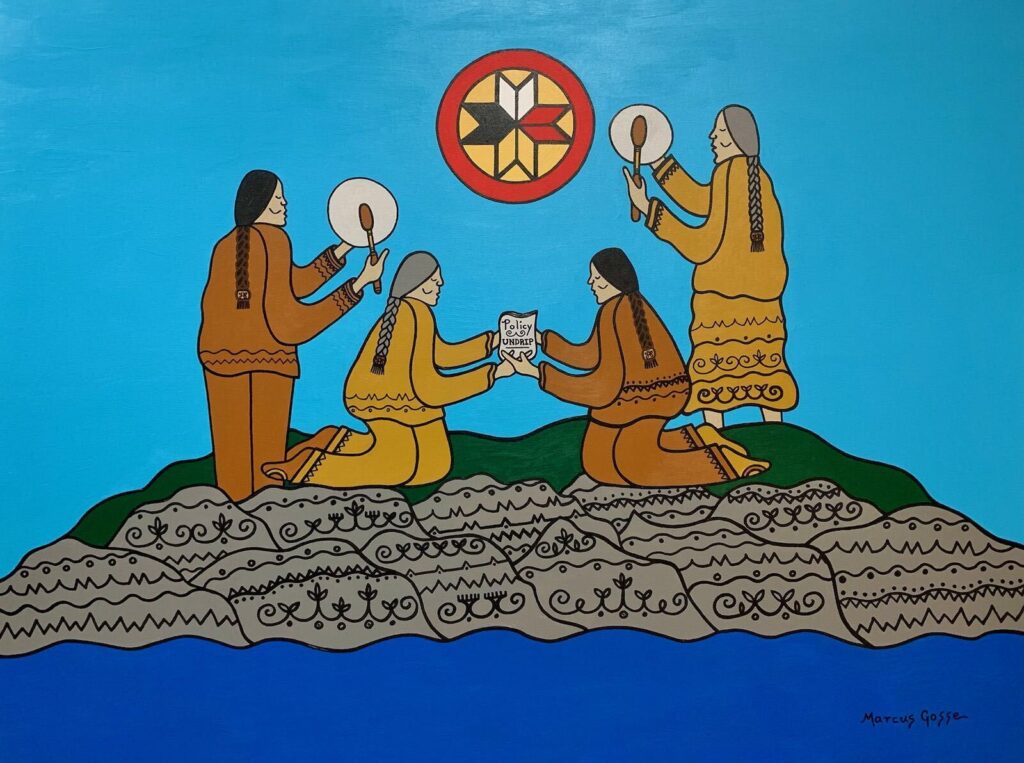
First Voice also launched a Creative Residency in Public Policy Spaces to embed Indigenous storytelling in public events and meetings. The following works were produced as a result:
- Marcus Gosse (2022): Cultural Awakening, a painting commissioned at the First Peoples Policy Forum.
- Amanda Gear (2023): Calling Out Colonization, a narrative written about the launch of Our Shared Vision, the 42 Calls for Change, and a future where reconciliation is widely practiced.
These initiatives helped ground policy work in Indigenous culture, storytelling, and lived experience.
2023–2024
Deepening Advocacy through Action Circles
In 2023, First Voice launched two Action Circles to foster collaboration rooted in lived experience. This work culminated in the 2024 Reconciliation Report, which tracked progress on the Calls for Change and highlighted both deepened relationships and ongoing challenges.
2023–2024
Deepening Advocacy through Action Circles
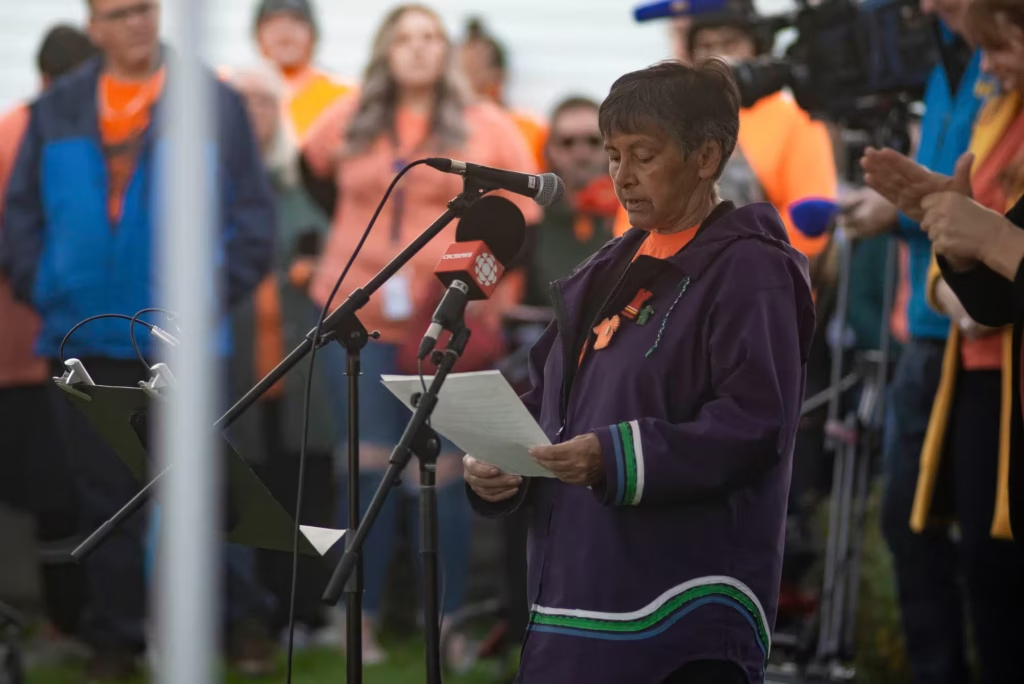
To deepen its focus on systemic change, First Voice launched two Indigenous-led Action Circles in early 2023, with work continuing into late 2024.
They included:
- The Indigenous Health Action Circle, which focused on cultural safety, access, and equity in health systems; and
- The Indigenous Justice Action Circle, which focused on over-representation, legal literacy, and structural discrimination.
The Action Circles brought together Elders, Community Advocates, and institutional partners to co-develop solutions grounded in lived experience and Indigenous governance principles. Their formation reflected a shift toward sustained, issues-based collaboration across sectors.
This work was further strengthened by the release of the coalition’s first Reconciliation Report in September 2024. Titled Steps Taken, Miles to Go, the 104-page document offered a comprehensive update on the status of each of the 42 Calls for Change, assigning specific tasks to key decision-makers. It also highlighted how sustained collaboration had led to deeper relationships with allies and key decision-makers. At the same time, the report underscored that many Calls for Change remained unanswered, pointing to ongoing obstacles like the routine exclusion of urban Indigenous rights-holders, lack of stable funding, and significant gaps in public education.
2024–2025
Relational Model Evolution
The coalition reached a pivotal point in late 2024 when the need for a more open, culturally grounded, and community-responsive model became clear. It was time to transition First Voice into a fully integrated advocacy strategy within First Light.
2024–2025
Relational Model Evolution
The coalition reached an important turning point in late 2024.
While the Partnership Table had been essential in laying the groundwork for change, it became clear over time that a more open, culturally grounded, and community-responsive model was needed, one that could reflect Indigenous relational values and deepen both participation and accountability.
Throughout this time, First Light worked with coalition members to adopt a relational model of engagement, grounded in the principle of building relationships in a good way. This shift represented a natural evolution, carrying forward the work and spirit of First Voice while making space for new relationships and more inclusive forms of collaboration.
Key elements of the new model included:
- The Restoring Good Relations Framework, which describes a spectrum of engagement based on four clusters of threads: Relations, Allies, Change-Makers, and Partners;
- An Indigenous-led Advocacy Council to offer strategic grounding on shared priorities; and
- The Gathering of Voices, a series of seasonal, community-wide events for feasting, listening, storytelling, and collective reflection.
This evolution also coincided with a broader shift in how Indigenous-led advocacy is resourced. Where early efforts relied primarily on funding from Indigenous Services Canada (ISC) through Urban Programming for Indigenous Peoples (UPIP), later stages drew support from a more diverse base of funders and supporters. With UPIP’s future having grown increasingly uncertain – and the Urban Aboriginal Strategy long since concluded – the need for stable, sustained investment in urban Indigenous advocacy has never been clearer.
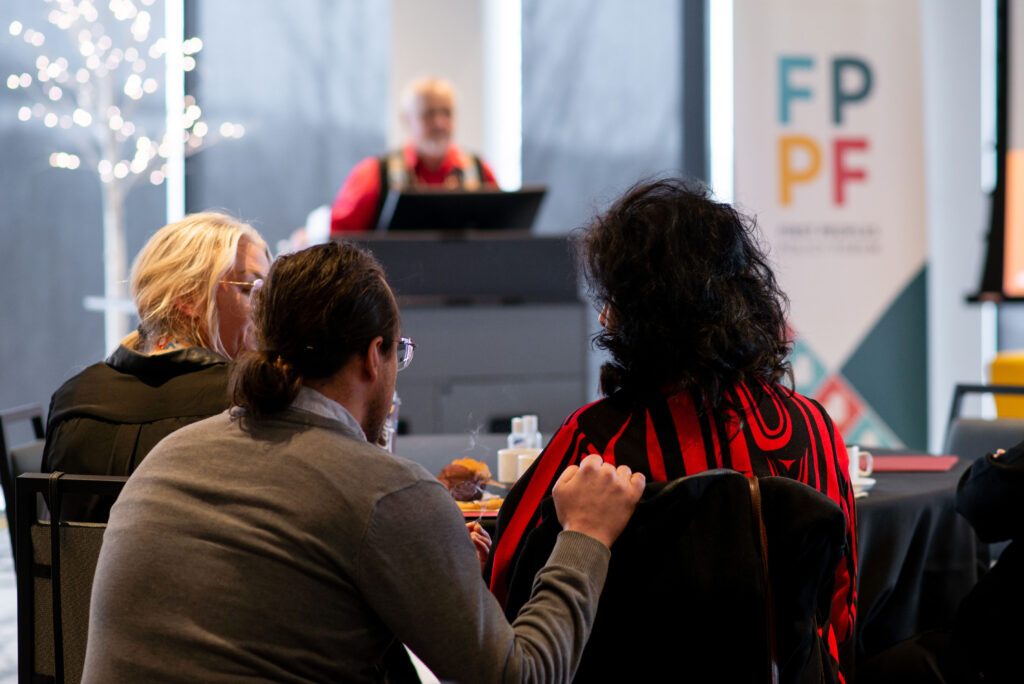
At the same time, a project that had begun with a single Coalition Coordinator had by this time grown into a ten-member advocacy team at First Light. The team’s work had come to encompass research, policy development, systems change, and public education, forming a core part of the First Light’s mission and identity. After five years of rapid growth, it was time to retire the First Voice name. What began as a modest effort to coordinate service delivery through a St. John’s Urban Indigenous Coalition had grown into a far-reaching advocacy strategy, one that had to become more fully integrated into the larger organization.
Looking Forward
While First Voice’s formal chapter has closed, its legacy lives on through First Light’s growing Advocacy Team. The 42 Calls for Change and the relationships from which they sprang continue to guide our work to advance truth and reconciliation.
Looking Forward
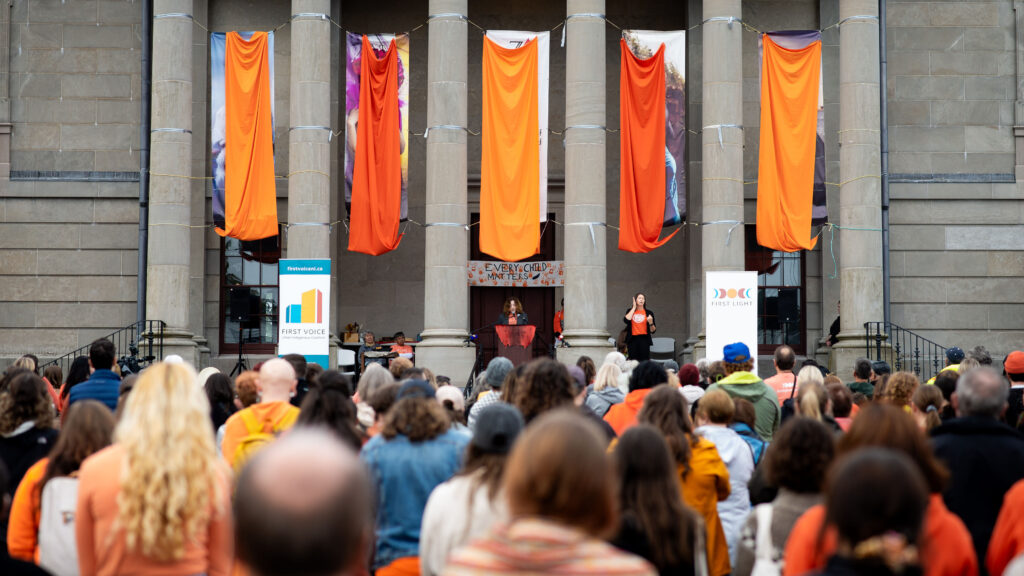
Although the formal structure and name of First Voice have come to a close, the coalition’s legacy is still active today.
The 42 Calls for Change remain a guiding force in First Light’s advocacy work; and the relationships, policy frameworks, and creative expressions nurtured through the coalition now shape how reconciliation is understood, practiced, and promoted in St. John’s.
The legacy of First Voice is one of mobilizing community to assert Indigenous sovereignty, empowering allies through reflection and learning, and collaborating with diverse partners to affirm urban Indigenous rights. That legacy lives on at First Light and in the many individuals and organizations – both Indigenous and non-Indigenous – who continue the hard work of advancing generational change in a spirit of truth and reconciliation.
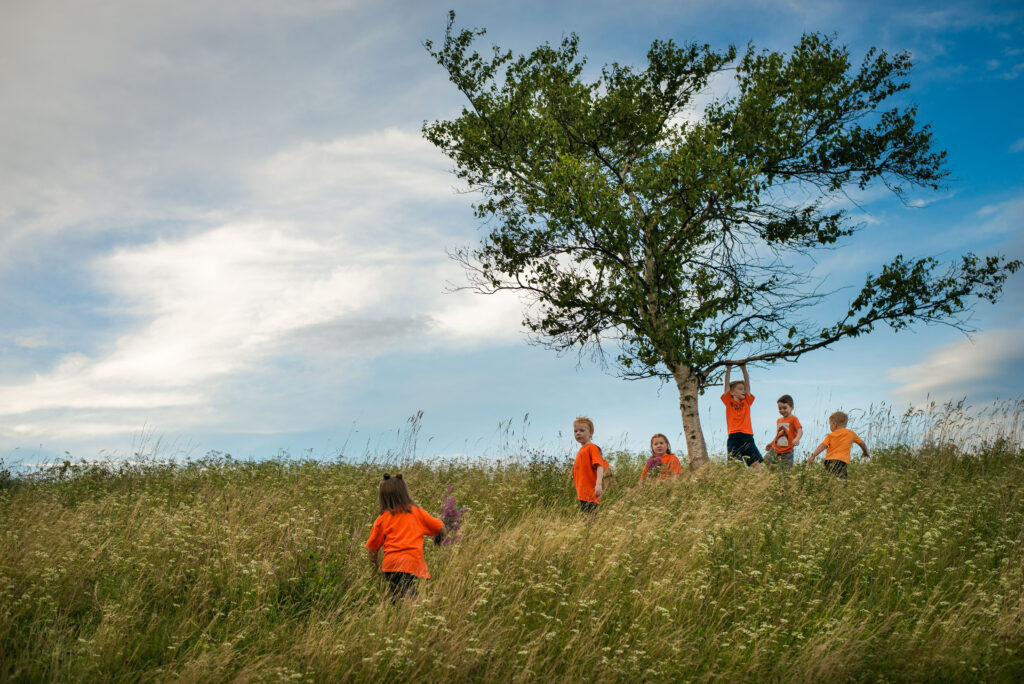
Until First Voice, I never felt like anyone was listening. Now I have a voice.
Charlotte, Inuk participant, First Peoples Policy Forum, 2022.
First Light gratefully acknowledges the following people who generously gave their time, energy, and emotional labour over the years to make First Voice a success: Amber Lawrence, Angelica Vincent, Brooke Blanchard, Caitlin Urquhart, Carey Majid, Catharyn Andersen, Catherine Fagan, Charlotte Winters-Fost, Collette Smith, Corey Morris, Cyril Tobin, Danny Breen, Daphne March, Darla King, Derek Coffey, Dorothy Haché, Draco Dunphy, Ellen Ford, Emma Reelis, Ian Froude, Jeff Hillyard, Jordan Lawrence, Kelly Simms, Kevin Breen, Laura Winters, Lisa Faye, Lisa Smith, Maggie Burton, Margaret Cranford, Marc Humber, Maria Gentle, Marjorie Muise, Max Liboiron, Michael Lannon, Mollie Butler, Natasha Drover, Natasha Fillmore, Pam Griffin, Paula Sheppard, Rebecca Kirkwood, Rutanya Wynes, Sharon Harvey, Susan Onalik, and Wendolyn Schlamp.